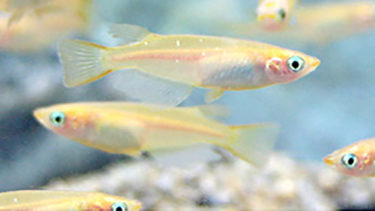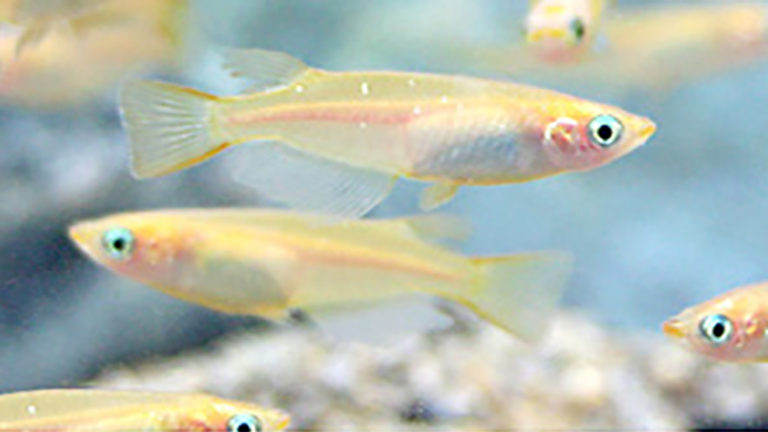
A soft, translucent orange glow shimmering just below the surface — that’s the unmistakable look of the Red Medaka (Hi-Medaka). The little orange fish you watched in school science class, the one swimming around the goldfish-scooping booth at a summer festival, the first pet your parents ever bought you — when most people picture a “Medaka,” chances are it’s the Red Medaka that comes to mind.
The Red Medaka is a selectively bred color variety of Japan’s native ricefish (scientific name: Oryzias latipes), a species in the family Adrianichthyidae (order Beloniformes). Its signature orange coloration appears because the black pigment has been bred out, letting the underlying orange and yellow pigments take center stage. Wild Medaka carry black, yellow, and orange pigment cells; when the black pigment is reduced or absent, the warm orange tones come to the fore. Native to rice paddies, rivers, and irrigation channels across Japan, this fish is well adapted to Japan’s climate and thrives both indoors and outdoors. It’s also affordable and easy to find, which is why it has long served as the quintessential beginner fish in the aquarium hobby — the variety most people think of first when they hear the word “Medaka.”
Drawing on years of first-hand experience keeping Red Medaka, this guide is written to be useful both to people raising their first fish and to seasoned keepers looking for a refresher. We hope you’ll read all the way through.
Quick Summary
- Red Medaka are a selectively bred color form of Japan’s native ricefish — hardy, easy to keep, and ideal for beginners
- Medaka generally get along well with one another, but feeding can be trickier when housed with body-shape variants like Daruma Medaka
- For spawning and fry-rearing, separating eggs from the adults is the single biggest key to success
When in doubt, this is the safe choice (starter tank kit)
GEX Slim Aqua Set 400 — A space-saving, slim-profile Medaka starter kit with an adjustable-flow hang-on-back (HOB) filter

A great companion purchase (Medaka-specific food)
Hikari Medaka no Mai Series — A staple color-enhancing food that brings out the orange in Red Medaka

 ポチップ
ポチップWhat Is a Red Medaka?
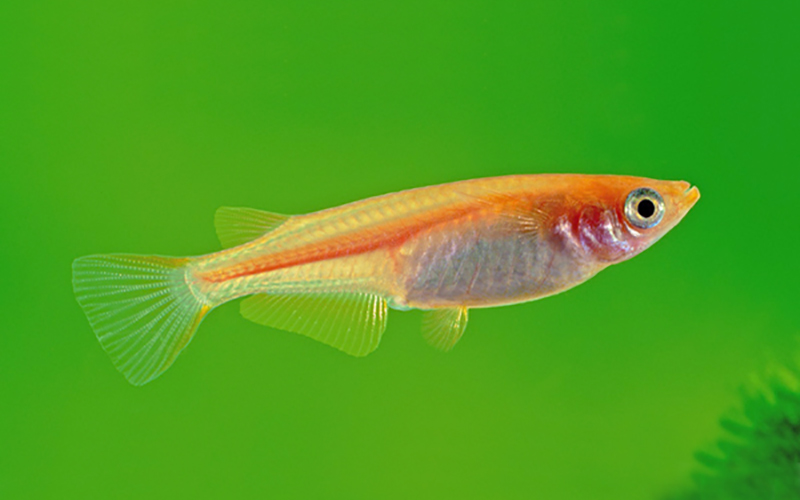
As the name suggests, the defining trait of the Red Medaka is its warm, flame-like orange (hi-iro) body color. The Japanese character “緋” (hi) traditionally refers to a bright, reddish-orange hue and is one of Japan’s classic traditional color names. The entire body is washed in this soft orange, and depending on the angle and lighting it can lean more yellow or more red, giving the fish a subtly shifting appearance. Adults reach roughly 3–4 cm (1.2–1.6 in) in length, with a rounded, charming little body shape.
Compared to the wild-type black Medaka, this color form has lost much of its camouflage value, but it more than makes up for it in ornamental appeal. In an outdoor pond setup, the orange really pops against the surface of the water, while in an indoor tank it contrasts beautifully with green aquatic plants. It’s also a fairly calm, easygoing fish that pairs well with other Medaka and small tankmates, making it adaptable to a wide range of keeping styles.
Origins and History of the Red Medaka
The Red Medaka has a long history — records show it was already being kept as an ornamental fish back in Japan’s Edo period (1603–1868). It originated from wild Medaka native to Japan (closely related to what’s known as the black Medaka), when, at some point, an individual was born lacking the usual amount of black pigment. This is what’s known as a “spontaneous mutation” — a genetic change that altered the fish’s coloration.
In the wild, brightly colored individuals are usually spotted and picked off by predators more easily, so they tend to be selected against. But humans noticed this beautiful orange variant, bred it deliberately, and protected it — and that’s how the Red Medaka became an established variety. This marked the beginning of the Red Medaka as a true cultivated strain.
Interestingly, breeding Red Medaka together doesn’t always produce orange offspring — a certain percentage of darker, blackish fry will still appear from time to time. That’s because the gene responsible for reducing black pigment isn’t always fully fixed, so occasional reversion to the ancestral coloring can occur. Through generations of selective breeding (choosing only the most vividly colored individuals to breed), keepers have been able to produce lines with more stable, richer coloration over time.
Throughout Japan’s Showa and Heisei eras (roughly 1926–2019), the Red Medaka was also widely used as teaching material in school science classes. Most of the Medaka used in lessons on “observing Medaka spawning” were Red Medaka, and many people who grew up in Japan have memories of watching embryonic development inside the eggs under a microscope. Thanks to its familiarity and ease of care, it remains a popular ornamental fish to this day.
In more recent years, flashier specialty varieties such as Yangkillifish (Yokihi) Medaka and Mikuni Medaka have come onto the scene, but if you trace their lineage back far enough, many lead straight back to the Red Medaka — making it fair to call the Red Medaka “the origin point of all improved Medaka varieties.”
Keeper’s tip: The Red Medaka is an exceptionally hardy fish, well adapted to Japan’s seasonal climate. It can overwinter without a heater both indoors and in outdoor pond setups, making it a great first fish for anyone who wants to dip a toe into the hobby without much fuss.
「水が少し濁ってきたけど、どのくらい換えればいいんだろう」「全部換えたほうがきれいになるのでは?」——金魚を飼い始めたばかりのころ、こんな疑問を持ったことはありませんか。水換えは観賞魚の飼育で最も頻繁に行うメンテナンスのひとつで[…]
How to Keep Red Medaka
Once you’ve got the basics down, this is a fish even beginners can enjoy keeping confidently for years. Let’s start with the key specs, then walk through the essentials for tanks, filters, food, and water changes.
Quick Reference: Key Specs
| Item | Guideline / Details |
|---|---|
| Scientific name | Oryzias latipes (selectively bred color form) |
| Classification | Order Beloniformes, Family Adrianichthyidae, Genus Oryzias |
| Native range | Japan (rice paddies, rivers, irrigation channels, etc.) |
| Adult size | About 3–4 cm (1.2–1.6 in) |
| Lifespan | 1–3 years (4+ years possible in excellent conditions) |
| Ideal water temperature | 61–82°F (16–28°C); optimal range 68–79°F (20–26°C) |
| Ideal pH | 6.0–8.0 (neutral to slightly alkaline is best) |
| Water hardness (GH) | 4–10°dH (moderate hardness suits them best) |
| Recommended tank size | 12 in / 30 cm or larger (18 in / 45 cm recommended for 5–10 fish) |
| Filter | Sponge filter or hang-on-back (HOB) filter (avoid strong water flow) |
| Heater | Generally not needed indoors (recommended if winter temps drop below 50°F / 10°C) |
| Food | Medaka-specific food (flakes/granules), frozen bloodworms, brine shrimp, etc. |
| Difficulty | ★☆☆☆☆ (beginner-friendly, very easy to keep) |
Notes on the Table Above
On water temperature: Because Red Medaka descend from a Japanese native species, they’re well suited to seasonal temperature swings. They can tolerate summer highs around 86°F (30°C) and winter lows around 41°F (5°C) without dying, but they’re most active and breed most readily in the 68–79°F (20–26°C) range. Outdoors, as water temperature drops in winter the fish enter a near-dormant state, with reduced activity and appetite.
On heaters: Thanks to their adaptation to Japan’s climate, these fish can typically overwinter indoors without a heater. That said, in colder climates where water temperature drops below 50°F (10°C), or if you want to keep breeding through winter, adding a heater (set to 64–68°F / 18–20°C) is a good option. A heater also helps maintain a stable environment year-round.
On difficulty: This is one of the hardier Medaka varieties, reasonably tolerant of fluctuations in water quality and temperature. That said, like all small fish, they don’t handle sudden swings well. Be sure to properly acclimate new fish after purchase.
Choosing a Tank
Red Medaka are small, but keeping a healthy group still requires an appropriately sized tank. A 12-inch (30 cm) tank works fine for a small group (around 3–5 fish), but if you want to keep a larger school of five or more, or plan to breed them, a 18-inch (45 cm) tank or larger is recommended.
A bigger tank means more water volume, which makes water quality easier to keep stable. Medaka are surprisingly sensitive to temperature swings and declining water quality, so giving yourself some margin with tank size is the secret to successful long-term keeping. Since Medaka spend most of their time near the surface, a wide, shallow tank with a large surface area suits them better than a tall one.
For outdoor pond-style setups, wide plastic tubs (sometimes called “tarai” in Japan) or traditional ceramic water-lily basins are also commonly used. Outdoors, direct sunlight naturally produces green water (water rich in phytoplankton), which doubles as a food source and pairs very well with Medaka keeping.
If you’re just getting started with Red Medaka, an all-in-one Medaka starter kit — tank, filter, and food bundled together — can save you the hassle of sourcing everything separately.
Recommended (starter tank kit)
GEX Slim Aqua Set 400 — A space-saving, slim-profile Medaka starter kit with an adjustable-flow hang-on-back (HOB) filter
This compact kit bundles a roughly 16-inch (40 cm) tank with a hang-on-back filter (Dual Clean). Its slim, wide-format design fits easily onto shelves, windowsills, or other tight spaces, solving the classic “I don’t have anywhere to put it” problem. The filter’s flow can be throttled down, which is easy on Medaka, and adding a sponge cover over the intake takes care of fry-suction safety as well. This is a great first setup for anyone starting out with Red Medaka.
Choosing a Substrate
Substrate isn’t strictly necessary, but adding it can dramatically improve the look of the tank and make the Red Medaka’s coloring really pop. It also gives beneficial filtration bacteria somewhere to colonize, helping keep water quality stable. Compared to a bare-bottom tank, a substrate-lined tank tends to hold water quality better, and the fish often appear calmer as a result.
Substrate color has a big impact on the fish’s coloration. Black or dark-colored substrate is the top recommendation, since it makes the Red Medaka’s orange pop the most. This works because Medaka have a trait called “color adaptation,” where their pigmentation intensifies or fades depending on their surroundings — a dark background tends to deepen their color, while a white or light-colored substrate tends to wash it out.
Substrates broadly fall into a few categories: gravel, aquasoil, and akadama (a fired-clay soil popular in Japan). Aquasoil is good at hosting bacteria and keeping pH in the slightly-acidic-to-neutral range, making it well suited to indoor tanks. Akadama is budget-friendly and widely used in outdoor pond setups. If easy cleaning is your priority, a medium-grain gravel or aquasoil — not too fine, not too coarse — is the most manageable option.
Keeper’s tip: Always rinse substrate thoroughly before adding it to remove cloudiness. Skipping this step can leave your water murky for quite a while. Also avoid piling it too thick — a layer that’s too deep can develop an oxygen-poor zone at the bottom that degrades water quality. About 1 in (2–3 cm) is a good target depth.
Recommended (black substrate / aquasoil)
GEX Pure Black — A deep black gravel substrate that maximizes the Red Medaka’s orange coloring
As the name suggests, GEX Pure Black is defined by its deep, rich black color. The contrast it creates against the Red Medaka’s orange is stunning, and it makes the coloring of other Medaka varieties pop too if you keep a mixed-variety tank. The uniform grain size makes it easy to lay down evenly, and waste shows up clearly against the dark background, making it easy to tell when a cleanup is due — a real practical bonus. Rinse it before use to keep your tank looking its best for the long haul.

Choosing a Filter
Because Red Medaka naturally live in slow-moving rice paddies and irrigation channels, strong water flow is a major source of stress for them. If you’re using a higher-flow filter such as a hang-on-the-back power filter or a canister filter, it’s important to redirect the outflow to soften the current.
The best filter choices for Medaka are a hang-on-back (HOB) filter or a sponge filter. HOB filters simply clip onto the rim of the tank and are easy to maintain, making them especially good for beginners. However, when using one, you must fit a sponge cover or fine mesh over the intake — without this precaution, small Medaka or fry can be sucked into the intake and killed. A pre-made strainer sponge, or simply wrapping the intake in cheesecloth or filter wool secured with a rubber band, solves this easily — just be sure to check before installing. Sponge filters are great at hosting beneficial bacteria and carry zero risk of sucking up fry, making them an especially safe choice if you’re planning to breed.
For outdoor pond setups, floating plants like water hyacinth or Egeria densa provide natural filtration, and in some cases a filter isn’t strictly necessary. That said, if plant cover is sparse or you’re keeping a larger number of fish, running a filter as a backup is a good idea for peace of mind.
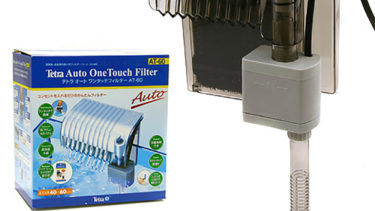
Recommended (hang-on-back filter)
Tetra Auto One-Touch Filter, AT Series — A flow-control dial makes this filter gentle on small fish
The standout feature of this filter is a single dial that lets you adjust water flow. For flow-sensitive small fish like Medaka, being able to dial the current right down matters a lot, and this is one reason the AT series has earned long-standing support from aquarists. Fitting a commercial strainer sponge over the intake prevents Medaka and fry from being sucked in. The series comes in several sizes to match different tanks, so you can pick the right model for a standard Red Medaka setup. Cartridge replacement is straightforward too, which is great for beginners who’d rather not fuss over maintenance.
 ポチップ
ポチップChoosing Food
For Red Medaka, the staple diet is a Medaka-specific flake or granule food. Medaka have small, upward-facing mouths, which makes floating food the easiest for them to eat. Commercial Medaka foods are formulated with this in mind, so reaching for a dedicated Medaka food is always a safe choice.
As a feeding guideline, offer enough food twice a day that they can finish it within 2–3 minutes. Leftover food is a major cause of water quality decline, so if you notice uneaten food, cut back the portion next time. Overfeeding can also cause digestive issues, so erring slightly on the side of “a little less than they’d want” is the healthier approach.
If you want to bring out more vivid coloring, color-enhancing foods containing astaxanthin (the pigment found in shrimp and crab) are effective. Feeding frozen bloodworms a few times a week also supplies extra protein, helping build a sturdier body condition and conditioning breeding adults ahead of spawning.
For more detail on food types and how to choose between them, see our dedicated article on Medaka food types and how to choose.
Recommended (Medaka-specific food)
Hikari Medaka no Mai Series — A staple color-enhancing food that brings out the orange in Red Medaka
This is Kyorin’s signature line of Medaka-specific food. It’s designed to float well at the surface, suiting the upward-facing mouths of Medaka and letting them feed in a natural posture. It’s formulated with astaxanthin and other color-enhancing ingredients, so feeding it consistently brings out a more vivid orange in Red Medaka over time. The fine granule size suits everything from adults to juveniles, making this a safe default choice if you’re unsure what food to buy.
ポチップHow to Do Water Changes
Water changes are one of the most important parts of routine Medaka care. As a general guideline, change about one-third of the tank’s water once a week. Replacing a large volume of water all at once causes a sudden shift in temperature and water chemistry that can seriously stress the fish, so it’s better to make smaller, more frequent changes.
Every water change requires dechlorinating the new water first. Tap water contains chlorine for sanitation purposes, and adding it straight to the tank is harmful to Medaka. Always treat it with a commercial water conditioner at the recommended dose before use. Also, if the new water’s temperature differs significantly from the tank, the shock can stress the fish — match the temperatures (within about ±4°F / ±2°C) before performing the water change.
While doing a water change, using a gravel vacuum (substrate cleaner) to siphon out waste and leftover food from the bottom of the tank helps keep things cleaner overall. This matters especially if you’re using substrate, since debris tends to settle into it. How often you need to change water varies with stocking density and tank size, but cloudy water or Medaka sitting listlessly near the bottom are both clear signs it’s time for a change.
Keeper’s tip: It’s understandable to find water changes a chore, but most Medaka health problems trace back to declining water quality. A little weekly effort goes a long way toward keeping your fish healthy and long-lived.
Recommended (dechlorinator / water conditioner)
Tetra Medaka no Mizu-tsukuri — Removes chlorine and protects mucus membranes for gentler water changes
Tetra’s Medaka-specific water conditioner instantly neutralizes chlorine while also including a slime-coat-protecting ingredient for the fish’s skin. Using it with every water change shields Medaka from the harshness of tap water while keeping the environment safe and comfortable. It’s a liquid formula that’s easy to dose using a dropper or measuring cap, with simple, straightforward usage.
 ポチップ
ポチップ「フィルター(ろ過器)って、どれを選べばいいの?」――アクアリウムを始めようとすると、必ずこの壁にぶつかります。外部式・上部式・投げ込み式・底面式・スポンジ式……種類が多すぎて、どれが自分に合っているのかわからない。「とりあえず安いやつ[…]
Tankmate Compatibility
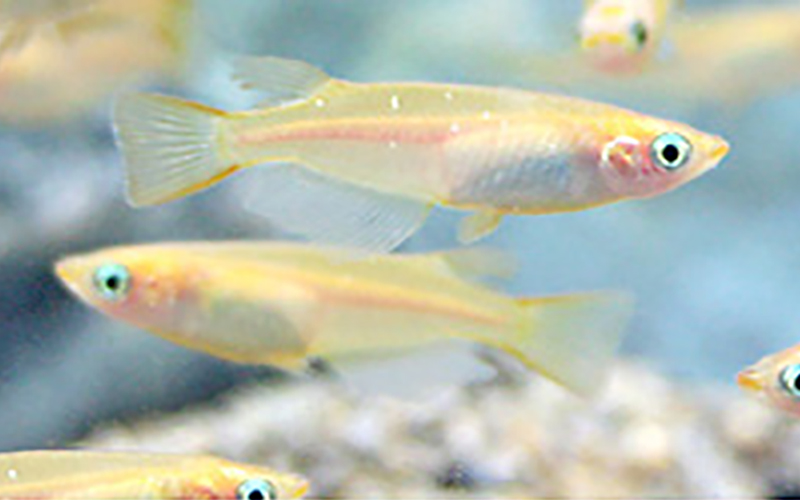
Some people assume Medaka can only be kept with their own kind, but that’s a misconception. One of the biggest joys of keeping Medaka is mixing different varieties and species to build a tank that’s uniquely yours. Red Medaka are calm and rarely start conflicts, so they generally coexist well with a wide range of tankmates. That said, certain pairings can cause problems, so it’s worth keeping the following points in mind.
Species That Pair Well
The following species are good companions for Red Medaka and are easy to keep alongside them.
- Other Medaka varieties (White Medaka, Blue Medaka, Yangkillifish (Yokihi) Medaka, Mikuni Medaka, etc.) — Since they’re all the same species, there’s generally no issue. Mixing several color varieties makes for a colorful, lively tank
- Neocaridina shrimp (Neocaridina davidi) — Excellent algae-eaters that get along well with Red Medaka; the two largely ignore each other and coexist peacefully
- Amano shrimp (Caridina multidentata) — Powerful, reliable algae-eaters, though their babies may get eaten, which makes breeding them alongside Medaka somewhat difficult
- Pond snails and Japanese trapdoor snails (excluding nuisance snail species) — Great cleanup crew members that graze algae off the glass and substrate
- White Cloud Mountain minnows (akahire) — Similarly sized, peaceful fish whose temperature tolerance closely matches that of Medaka, making for an easy combination
Species That Require Some Caution
The following pairings aren’t impossible, but they call for a bit of extra attention.
- Daruma Medaka and long-finned Medaka varieties — Because their body shape differs from standard Medaka, they tend to be slower eaters. Standard-bodied Medaka may out-compete them for food, so feeding in multiple spots around the tank helps even things out
- Loaches — Generally compatible, though occasionally an individual will nip at Medaka at night. It’s best to avoid pairing with larger loach species
- Small goldfish varieties — As they grow, their mouths get large enough to eat Medaka. Cohabitation may work while both are young, but it tends to break down over the long term
Species to Avoid
As a rule, avoid housing Red Medaka with the following.
- Predatory fish (any fish notably larger than Medaka) — Adult goldfish, arowana, bichirs, and similar species are obviously unsuitable, as they can swallow Medaka whole
- Bettas — Known for nipping at fins, which can damage Medaka, especially long-finned varieties; avoid this pairing in particular
- Large pleco species — May latch onto weakened or sleeping Medaka
There’s also a point worth remembering about mixing different Medaka varieties with each other. Premium specialty varieties (such as Yangkillifish (Yokihi), Mikuni, and sparkle-scale Medaka) are best kept on their own. Their appeal lies in distinctive individual coloring and body shape, and mixing varieties leads to crossbreeding that dilutes those traits over generations. If you do plan to keep a common variety like Red Medaka alongside others, it’s worth deciding in advance whether or not you intend to manage breeding.
Keeper’s tip: When enjoying a mixed-variety Medaka tank, the golden rule is never to overstock relative to tank size. Overcrowding is a recipe for trouble and accelerates water quality decline. A good rule of thumb is roughly one fish per liter (about a quart) of water.
Breeding and Spawning
Spawning Timing and How to Tell
Red Medaka tend to begin spawning once water temperature reaches 64°F (18°C) or above and daylight hours exceed 13 hours. In nature, spring through summer (roughly April–September) is the spawning season. With a heater and lighting set up indoors, you can breed them through the winter as well.
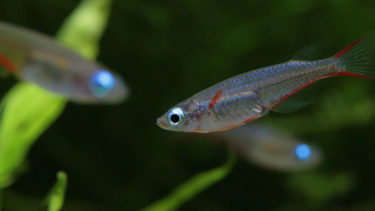
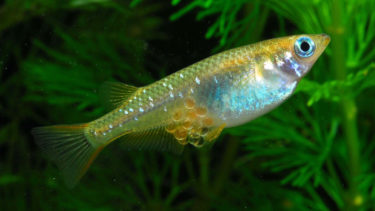
The clearest sign of spawning is a cluster of eggs hanging from the underside of the female. After spawning, the female swims around for a while carrying the fertilized eggs beneath her body before rubbing them off onto plants or a spawning mop. Sex can be told apart by dorsal fin shape (the female’s is notched and shorter toward the back, the male’s runs unbroken to the rear) and anal fin shape (the female’s is roughly parallelogram-shaped, the male’s narrows toward the rear).
For a more detailed breakdown of how to tell males from females, see our dedicated article below.
「産卵させたいけど、どれがオスでどれがメスかわからない——」そんな悩みを抱えて水槽をじっと眺めた経験はありませんか?メダカはとても小さな生き物ですが、実は見るべきポイントさえ知っていれば、他の観賞魚と比べてオス・メスの見分け方はかなりわ[…]
From Spawning to Raising Fry
| Step | Details |
|---|---|
| 1. Provide a spawning surface | Add water hyacinth, Java moss, or a commercial spawning mop to the tank. Females will rub against it to deposit their eggs |
| 2. Separate the eggs | Move deposited eggs to a separate container (a breeding box or hatching container). Adults will eat eggs and fry, so separating them greatly boosts hatch rates |
| 3. Wait for hatching | At 77°F (25°C), eggs hatch roughly 10–12 days after spawning. Lower temperatures extend this (about 18 days at 64°F / 18°C) |
| 4. Feed the fry | For the first 2–3 days after hatching, fry live off nutrients from their yolk sac. After that, offer fine fry powder food, infusoria, or brine shrimp nauplii |
| 5. Reintroduce to the main tank | Once fry reach about 1 cm (0.4 in) and are no longer at risk of being eaten by adults, they can be moved back into the main tank |
Spawning and breeding are among the most rewarding stages of keeping Medaka.
Keeper’s tip: It’s tempting to assume the fish will “spawn naturally and it’ll all work out,” but simply adding a spawning mop and getting into the habit of separating eggs right away dramatically boosts fry survival rates. Just setting up one spawning mop is enough to get started.
For a more detailed walkthrough of spawning techniques, things to watch out for, and how to raise fry, please see our dedicated articles below.
メダカを飼っていると、ある日気づくと小さな卵がお腹にくっついている——そんな場面に出会ったことがある方も多いのではないでしょうか。メダカは比較的繁殖しやすい魚で、適切な環境さえ整えれば、初めての方でも産卵に挑戦することができます。[…]
産卵床についた小さな卵を別の容器に移して、ドキドキしながら孵化を待った経験はありませんか。そしていざ孵化したものの、「こんなに小さいの?」「いつからエサをあげればいいの?」と戸惑ってしまった方も多いのではないでしょうか。メダカの[…]
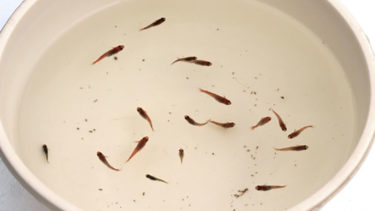
Important Care Considerations
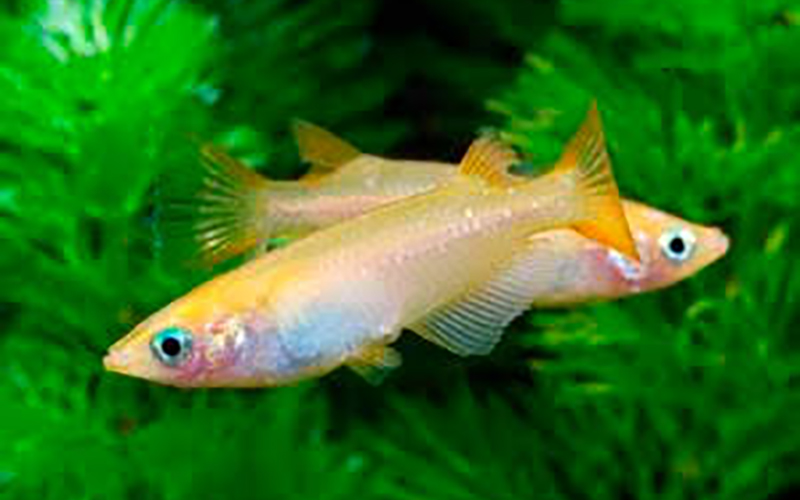
Red Medaka are hardy and easy to keep, but since you’re putting in the effort, you’ll want to help them live long, healthy lives. Knowing the following considerations ahead of time will help you avoid problems and create a comfortable environment.
Avoid sudden swings in water quality or temperature
Red Medaka have a reasonable tolerance for environmental change, but sudden shifts are still stressful. Be especially careful with “acclimation” and “temperature matching” whenever you introduce newly purchased fish to the tank. The standard approach is to float the unopened bag on the surface of the tank to equalize temperature (about 20–30 minutes), then gradually mix tank water into the bag to let the fish adjust to the new water chemistry.
Avoid overcrowding
Because Medaka are so small, it’s easy to assume you can pack a lot of them into a small container — but overcrowding is a major source of problems. A good rule of thumb is about one fish per liter (roughly one quart) of water. Overcrowding causes oxygen depletion, declining water quality, and stress-related immune suppression all at once, sharply raising the risk of disease outbreaks.
If coloring looks faded, reconsider the environment
The Red Medaka’s orange tends to look more muted compared to other varieties, such as the Yangkillifish (Yokihi) Medaka. Kept alone, it can look a bit plain by comparison, but that’s not actually a flaw. Pairing it with White, Blue, or black Medaka makes the Red Medaka’s orange stand out beautifully. Switching to a color-enhancing food, or moving the tank somewhere with more natural or artificial light, can also help deepen the coloring.
Don’t neglect predator protection outdoors
If you’re enjoying an outdoor pond setup, watch out for predators such as cats, birds (crows or herons), and dragonfly larvae. Covering the container with netting or a lid is the most effective defense. Dragonfly larvae are invisible at the egg stage, so keep a close eye on your setup during the season when dragonflies are active (summer through fall).
Watch for oxygen depletion from high temperatures and direct sun
In summer, prolonged direct sunlight can cause water temperature to spike, and once it exceeds 95°F (35°C), the risk of death from oxygen depletion rises sharply. For outdoor setups, use shade cloth or a reed screen to provide shade. Adding an air pump for aeration is also an effective way to guard against low oxygen levels.
Never release them into the wild
It’s understandable to feel like releasing fish back into “nature” once they’ve grown, but releasing Red Medaka (a selectively bred variety) into the wild should always be avoided. Crossbreeding with wild native Medaka disrupts genetic diversity and can seriously harm wild Medaka populations. If you can no longer keep your fish, consider returning them to a pet shop or rehoming them with someone you trust instead.
Common Diseases and How to Prevent and Treat Them
Red Medaka are a relatively hardy fish, but declining water quality or sudden environmental changes can still trigger illness. Catching problems early and acting quickly is essential. Get into the habit of observing your fish closely, and familiarize yourself with the following common diseases and their symptoms.
Ich (White Spot Disease)
This disease causes small white spots resembling grains of salt to appear on the body, caused by the parasite Ichthyophthirius multifiliis. It tends to flare up after sudden temperature changes or when immunity is low, and because it’s highly contagious, prompt treatment is essential once spotted.
- Treatment: Dose a commercial Medaka-safe ich treatment (such as “Agten” or “Green F Liquid”) at the recommended rate, and raise the water temperature to 81–82°F (27–28°C), since the parasite is sensitive to heat. Combine with water changes and medicated treatment
- Prevention: Avoid sudden temperature swings, and quarantine new fish in a separate container for 1–2 weeks before introducing them
Recommended (ich treatment)
Nippon Animal Pharmaceuticals Agten — A fast-acting malachite-green-based treatment for ich and fin rot
This is a widely used liquid treatment with malachite green as its active ingredient, commonly used against ich. It acts directly on the parasite’s free-swimming stage, and catching the infection early combined with prompt dosing gives strong results. It’s relatively gentle on Medaka, making it one of the more user-friendly treatments available. Always remove activated carbon from your filter before medicating.
 ポチップ
ポチップFin Rot
This disease causes the edges of the fins to appear as if they’re dissolving away in white, caused by the bacterium Flavobacterium columnare. It’s typically triggered by declining water quality or bacterial infection through damaged fins. Because it progresses quickly, prompt treatment is important once detected.
- Treatment: Medicate with an antibacterial treatment such as “Elbagin Ace” or “Green F Gold Granules.” Since infection can spread to other fish, treating the whole tank is often the most effective approach
- Prevention: Keep water quality clean with regular water changes, and remove any sharp decorations from the tank that could injure the fish
Recommended (fin rot and bacterial infection treatment)
Nippon Animal Pharmaceuticals Elbagin Ace — A powerful broad-spectrum treatment for fin rot, hole disease, and other bacterial infections
This powder-form treatment is built around sodium nifurstyrenate as its active ingredient and addresses a broad range of bacterial infections. It’s particularly effective against fin rot and is trusted by many aquarists as a reliable treatment for ornamental fish. It works even at low doses, so accurate measuring is important when using it. Remove any activated carbon from your filter during treatment and run good aeration throughout.

Fungal Infection (Cotton-Wool Disease)
This disease produces white, cotton-like growths on the body or at wound sites, caused by fungi such as Saprolegnia species. It tends to take hold on damaged skin or in weakened fish, and is especially common during cooler months (fall through spring).
- Treatment: Medicated baths with “methylene blue” or “Green F Liquid” are effective. Gently removing the fungal growth with tweezers before medicating improves results
- Prevention: Isolate and treat injured fish promptly, keep water temperature stable, and avoid overcrowding
Recommended (fungal infection treatment)
Nippon Animal Pharmaceuticals Shin Green F Clear — A colorless, broad-spectrum treatment for fungal infections and ich
Unlike methylene blue, this colorless, clear-formula treatment doesn’t tint the water blue, letting you keep an eye on tank conditions while treating. It’s effective against the fungi responsible for cotton-wool disease as well as ich, and its ease of use has earned it support from many aquarists. Since it doesn’t stain plants or decorations, it’s relatively easy to use directly in a display tank as well.
 ポチップ
ポチップDropsy
This disease causes the scales to stand out like a pinecone and the body to appear swollen. It’s caused by Aeromonas bacteria, such as Aeromonas hydrophila, which damage internal organs, making it difficult to treat and often resulting in a high mortality rate once advanced.
- Treatment: Medicated baths or medicated food using antibacterial treatments such as “Green F Gold Granules” or “Kanpara D” can help. Isolate the affected fish as soon as you spot symptoms and act quickly
- Prevention: Maintain rigorous water quality management, minimize stress in the environment, and keep up with regular water changes and substrate cleaning
Recommended (dropsy / Aeromonas infection treatment)
Nippon Animal Pharmaceuticals Green F Gold Liquid — A liquid treatment for Aeromonas and bacterial infections
This liquid treatment contains a furan-based antibacterial compound and is effective against Aeromonas bacteria, a common cause of dropsy, as well as other bacterial infections. It dissolves more readily than the granule form and is easy to dose into small volumes of water, making it well suited for use in a separate quarantine/treatment tank. Dropsy progresses quickly and is difficult to cure once advanced, so starting treatment as soon as you notice the scales standing out is critical.
 ポチップ
ポチップBasic Care to Prevent Disease
- Don’t skip the weekly water change of roughly one-third of the tank volume
- Quarantine new fish and plants in a separate container before introducing them to the main tank
- Avoid overcrowding and give Medaka plenty of space
As a preventive measure or first response to mild symptoms, salt baths (an osmotic therapy using salt water) are also widely used. Placing fish in a 0.5–0.8% salt solution helps regulate their internal fluid balance and supports the fish’s own recovery ability. Using a salt formulated specifically for aquarium fish is the safer option.
Recommended (salt bath / conditioning salt)
SUDO Star Pet Natural Pearl Salt for Goldfish — A natural salt for salt baths and conditioning, also suitable for Medaka
This natural salt is widely used for salt baths and general conditioning with goldfish and Medaka alike. Unlike refined table salt, it retains trace minerals that support recovery and immune function. It’s simple to use — just measure out what you need straight from the bag — and it’s well worth keeping on hand as a first response whenever a Medaka isn’t looking well.

Recommended Starter Equipment
For anyone just starting out with Red Medaka, here’s a category-by-category rundown of the equipment you’ll need. Build up your setup gradually according to your budget and priorities.
| Category | What to Look For | Why It Matters |
|---|---|---|
| Tank | A wide, shallow tank, 18 in (45 cm) or larger | A wide tank with a large surface area suits Medaka. More water volume also means more stable water quality |
| Filter | A sponge filter, or a hang-on-back filter with adjustable flow | Gentle on Medaka, which dislike strong currents, and carries no risk of sucking up fry |
| Food | Medaka-specific flake food (with color-enhancing ingredients) | Floating flakes suit their upward-facing mouths; color-enhancing ingredients deepen the orange tone |
| Water conditioner | Dechlorinator (with a slime-coat-protecting ingredient) | Use with every water change; a Medaka-specific formula with mucus protection is ideal |
| Spawning surface | A commercial spawning mop or water hyacinth | Essential if you want to breed. A spawning mop is low-maintenance; water hyacinth creates a more natural setup |
| Substrate | Black substrate (black volcanic soil or Medaka-specific aquasoil) | A darker background makes the Red Medaka’s orange coloring pop. Also supports bacterial colonization |
| Disease treatment | Green F Gold Granules, methylene blue | Good to keep on hand just in case. Catching and treating disease early is the key to recovery |
| Plants (optional) | Water hyacinth, hornwort, Egeria densa | Helps purify water and serves as a spawning surface and hiding spot. Water hyacinth in particular is ideal for outdoor pond setups |
Keeper’s tip: You don’t need to buy everything at once. Starting with just a tank, filter, food, and dechlorinator is enough to get going. As you get more into breeding, add a spawning mop; once you start caring more about coloring, add a color-enhancing food — building out your setup gradually is part of the fun.
Frequently Asked Questions
水面をゆらりと泳ぐ、深みのある朱赤色——その姿を一度見たら、どこかで忘れられなくなる魅力を持っているのが楊貴妃メダカです。「メダカって地味なものでしょ?」と思っていた方ほど、はじめて楊貴妃メダカを目にしたときに「え、こんなに綺麗[…]
Conclusion
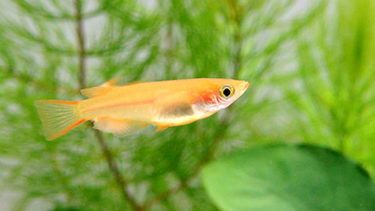
The Red Medaka is, in many ways, the iconic, defining “Japanese Medaka” — a fish that’s been beloved in Japan for generations. It traces its origins to a mutant individual born lacking black pigment within a wild Medaka population, gradually refined and fixed into a stable variety through generations of selective breeding by hand. Its orange coloring can look understated next to flashier specialty varieties, but paired with White or Blue Medaka, the colors set each other off beautifully, giving it a quiet, warm charm all its own.
To recap the key care points: Red Medaka tolerate a fairly wide range of conditions — water temperature 61–82°F (16–28°C, ideally 68–79°F / 20–26°C) and pH 6.0–8.0 — and they’re hardy enough to overwinter without a heater in a typical indoor Japanese-style environment. A gentle-flow sponge filter or hang-on-back filter is the best fit, and a weekly water-change habit goes a long way toward lowering disease risk. Spawning and raising fry also become much more successful simply by providing a spawning surface and separating the eggs — it’s well worth giving a try.
If you’ve ever thought “I’d like to try keeping Medaka,” the Red Medaka is about as good a first step as you could ask for. From the fish you might remember from a school science class to the natural charm of an outdoor pond setup, we hope your time with Red Medaka becomes a rich and rewarding start to your aquarium journey.
メダカ専門店に足を運ぶと、水槽の中にずらりと並ぶカラフルな魚たちに思わず足が止まる——そんな経験をされた方も多いのではないでしょうか。「こんなにたくさん種類があるの?」「どれを選べばいいかわからない」と戸惑ってしまうのは、むしろ[…]