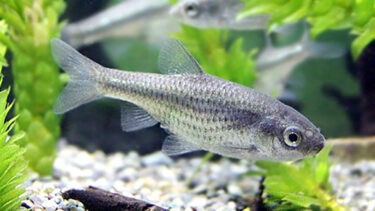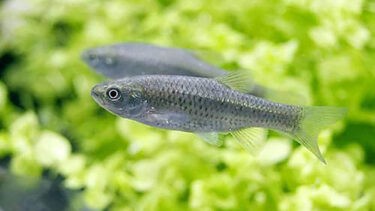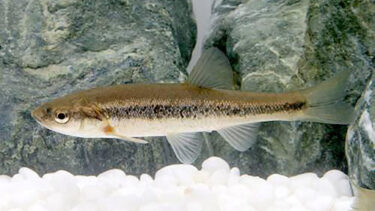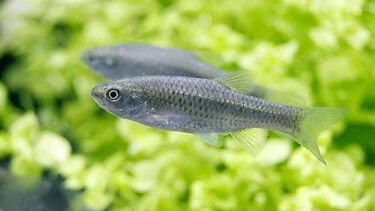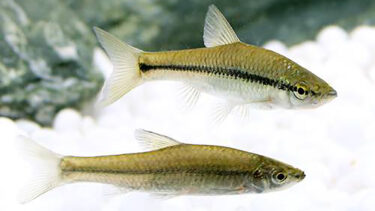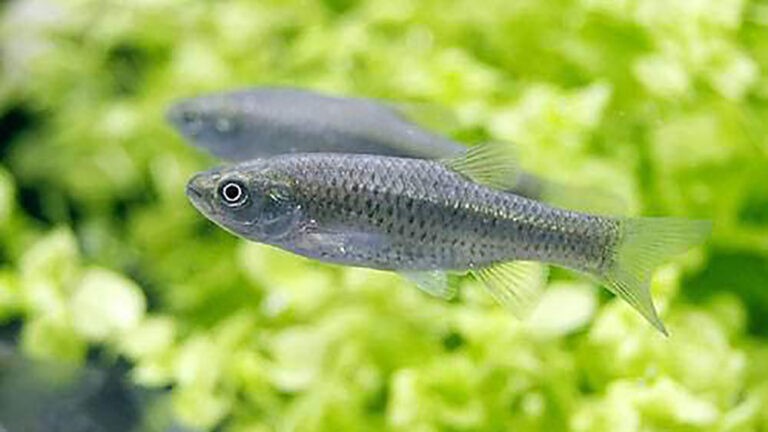
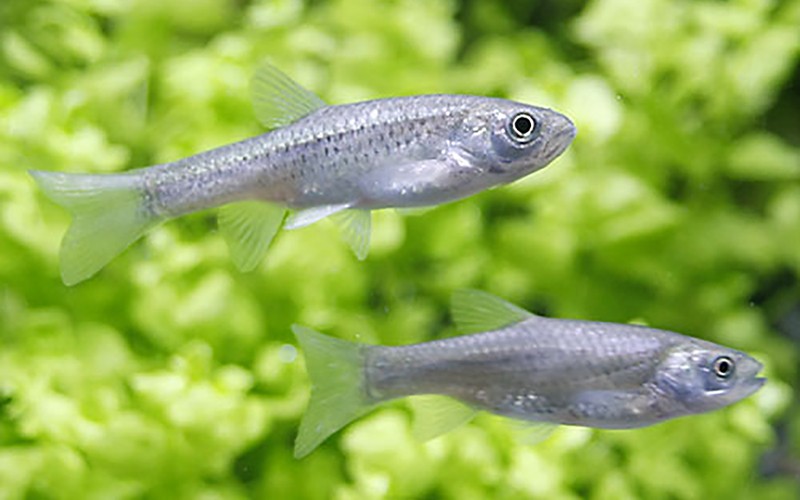
The Hinamoroko is a light brown river fish with a white abdomen and light dark vertical stripes on its sides. It is an endangered species in some places. In this article, I would like to explain in detail the characteristics and how to keep such a fish.
What is Chick Moroko?
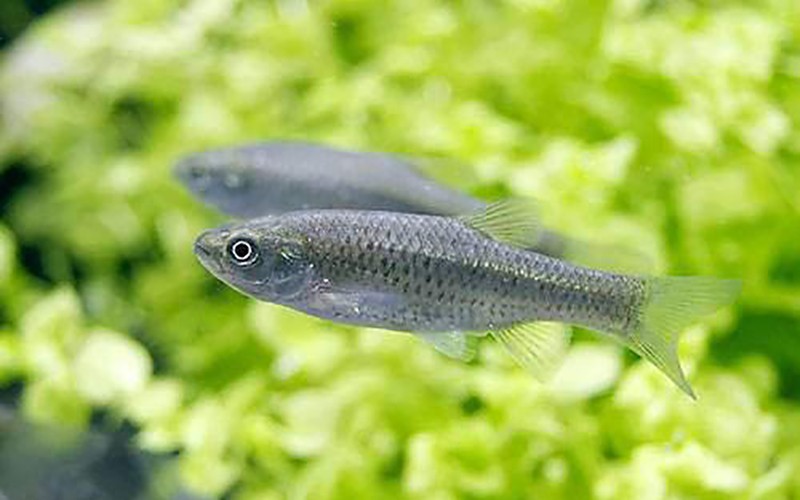
Hinamoroko belongs to the genus Hinamoroko of the carp family Carpidae. The habitat of the Hinamoroko is in East Asia, including China and Korea. In Japan, it is distributed only in irrigation canals in the mountains of the Oaza-Takeno district of Tanushimaru-cho, Kurume City, Fukuoka Prefecture, Kyushu.They prefer to live in corners of slow-flowing rivers, small streams, lakes, marshes, and irrigation canals. They are also endangered in some places. The brown moroko is low in stature and has no mustache. Its body color is light brown with a white abdomen and light dark longitudinal stripes on its sides. The fin moroko is found only in some areas of northern Kyushu. For this reason and others, it is said that this fish proves that the Japanese archipelago was once connected to the continent.
体側中央を走る暗い藍色の縦縞と、繁殖期に赤く染まるオスの婚姻色——カワムツは日本の清流を代表する川魚の中でも、特に色鮮やかな魅力を持つ種類です。警戒心が強く岩陰や植物の陰に素早く隠れるため、自然界では「いるのにつかまえられない魚」として[…]
エラ蓋の後ろに輝く目玉のような模様——これがオヤニラミの最大の武器であり、最大の魅力です。この「眼状紋」が大きな捕食者を威嚇し、卵をにらむように守り続けるオスの姿が「親睨み(おやにらみ)」という名前の由来になっています。場所によっては絶[…]
ガラス面や石にぴたっと張り付き、くりくりとした大きな目でこちらを見つめる——ヨシノボリはそのユニークな行動と愛嬌ある顔立ちで、一度飼い始めると虜になる川魚です。吸盤状の腹びれで垂直な壁を登る姿は、まさに水槽の中のクライマー。気性が荒く縄[…]
How to keep daisy moroko
The chick moroko can be an easy species to keep as long as you know how to keep them. The lifespan of the chick moroko is about 2 to 3 years. Their body size is approximately 5 to 7 cm. However, both lifespan and body size vary depending on the environment in which they are kept and the food they are fed. They prefer slightly alkaline to neutral water quality, with a pH of 7.0 to 8.0. They can live in water temperatures between 5-25℃.
A heater is a device that maintains a constant water temperature. If you go to a specialty store that carries heaters, you will find a wide variety of types. Some people may be at a loss as to which one to choose. In this article, we would like to explain about such heaters [...]
Points to keep in mind when mixing swimmers
Regarding mixed swimming, first of all, the character of the daisy moroko is mild-mannered. For this reason, it is recommended to mix them with species of the same size or medium-sized species such as rosy bitterling.Since the fin moroko is an omnivore, it is necessary to be careful when mixing with smaller species, as they may chase after them. Also, if the mixed species is a territorial species or a species that chases, it may cause stress and weaken the fish. If you are worried about having them swimming together, we recommend that you add more aquatic plants to the tank to create a hiding place for them.
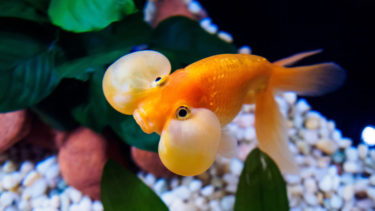
Many people think that goldfish are the goldfish that you see at fairs and festivals in the summer, and that there are many different kinds of goldfish. And it is no exaggeration to say that each type of goldfish has its own characteristics, and that is the best part about goldfish [...]
When you go to a specialty store to look at killifish, you will be surprised at the many varieties available. The prices are different, as are the body colors and patterns, so it is hard to know what to choose. So, in this article, I would like to explain in detail about the different types of medaka. Types of Medaka Scarlet Medaka [...].

Points about spawning
Many people who keep daisy moroko want to breed them. In the wild, the chick moroko spawn from June to September. If kept in captivity, the timing when the water temperature reaches around 20 degrees Celsius is the signal for spawning. When it is time to spawn, males turn golden in color and have a very small trailing star on their pectoral fins. The female extends a black tube called an oviduct from near her rump.When mature males and females are present, they spawn on water plants. They hatch in approximately 24 hours when the water temperature is 25°C. As fry, they consume yokelsacks (nutrients received from their parents) like other species, and then they should be fed with fry food. The fry then grow to adulthood in one year.
Points to keep in mind when keeping daisy moroko

The fin moroko is a pale brown river fish with a white abdomen and light dark vertical stripes on its sides. The fin moroko is often mistaken for the kawabatamoroko. It differs from the Kawabata moroko in that it is shorter and has no bulge on the edge of its abdomen behind the ventral fins.The population of fin moroko has been drastically decreasing due to development and environmental degradation of rivers and other areas. There was even a time when they were thought to be extinct in the natural world. Currently, various local governments are engaged in conservation and other activities. They are an important river fish in terms of education, as they are an essential part of the traditional Japanese ecosystem. If you are interested in the fin moroko, we recommend that you take a look at them at a specialty store.
Kawabatamoroko are a genus of river fish in the carp family, Carpidae, found in Japan west of Shizuoka Prefecture, Tokushima Prefecture, Kagawa Prefecture, Fukuoka Prefecture, and Saga Prefecture, with a silvery white base, greenish brown back, and grayish brown sides with vertical bands. Kawabatamoroko are also found in Japan [...].